Trichy's Rockfort Teppakulam Gets Its First Desilting in 30 Years
What it means for the city and its heritage — on 15th May 2026, the Tiruchirappalli City Corporation formally inaugurated the desilting of the historic Rockfort Teppakulam at the Thayumanavar Temple, the first such restoration in three decades. Published by Madhubalan IAS, then Commissioner, Tiruchirappalli City Corporation.
A Debt Being Repaid
There are moments in administration that feel less like routine work and more like a debt being repaid. The desilting of the Rockfort Teppakulam, the ancient temple tank at the foot of the Thayumanavar Temple in Tiruchirappalli, is one of those moments. This tank had not seen a desilting operation in thirty years — thirty years of accumulated silt, debris and neglect slowly reducing one of Trichy's most historically significant water bodies to a fraction of its capacity. On 15th May 2026, that changed.
A Tank That Has Stood for Centuries
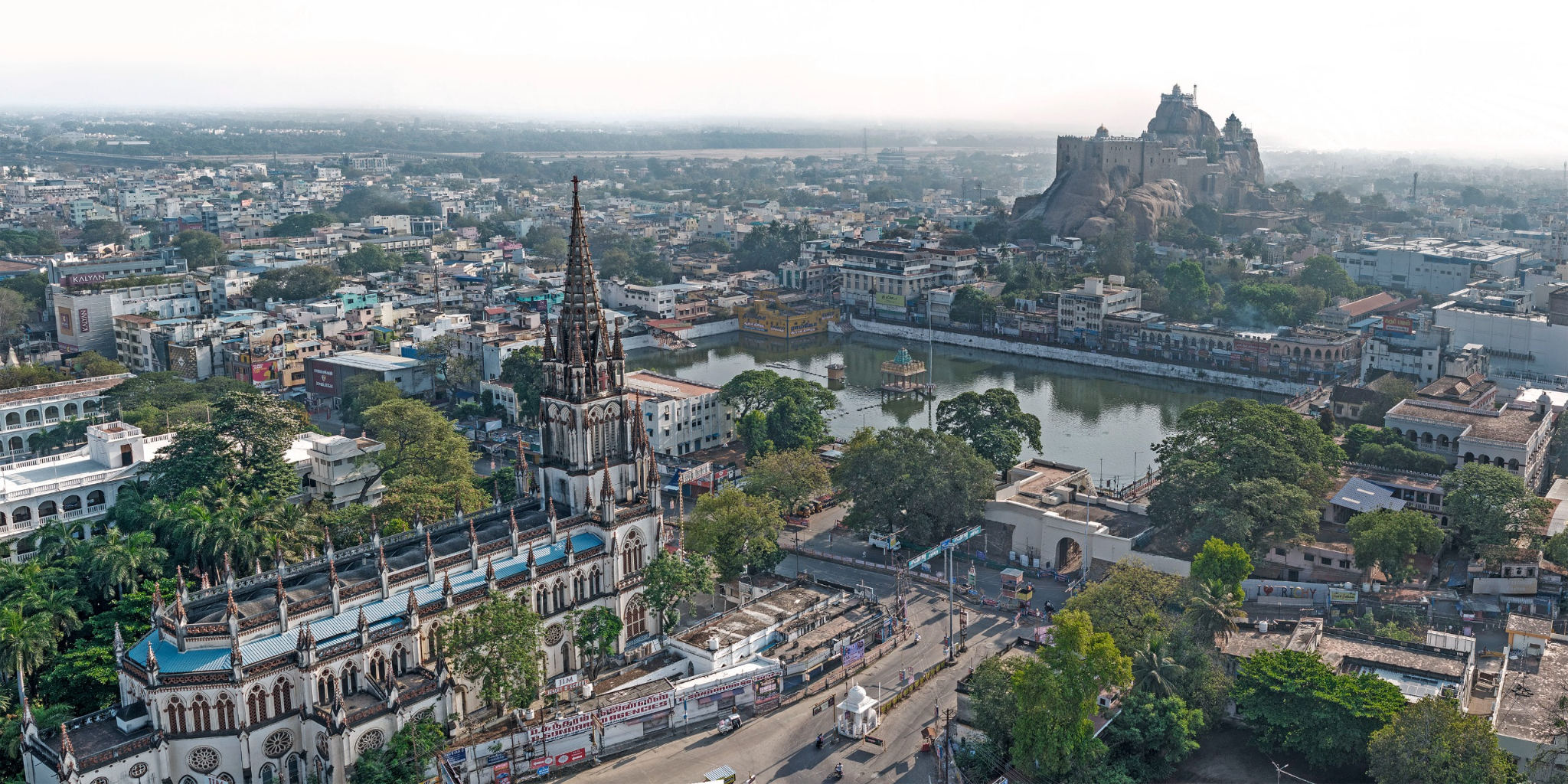
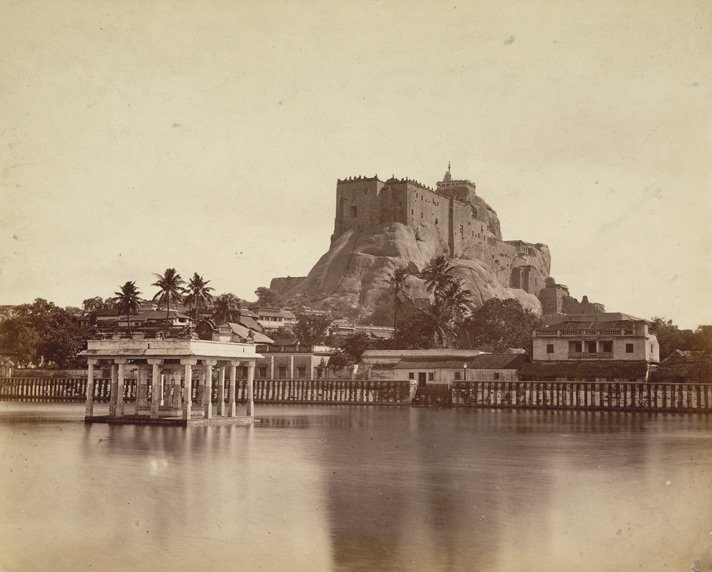
The Teppakulam at the foot of the Rockfort is a living piece of the city's identity, sitting at the base of a rock formation estimated to be roughly 3,800 million years old. The Thayumanavar Temple it serves was built during the Pallava period and is a Paadal Petra Sthalam, one of the 276 Shiva temples of the Saiva canon. The tank is the setting for the annual Theppa Thiruvizha — the float festival celebrated since 1546.
The Condition Before Work Began
Silt accumulation had significantly reduced the tank's water storage capacity. The area around it had become a makeshift vending zone, with encroachments eating into space that should belong to the water body, and water quality had deteriorated. As a first step, the Corporation declared the Teppakulam a no-vending zone, clearing the encroachments that had made meaningful maintenance impossible for years.
15th May 2026: The Day Work Began
This was not a symbolic gesture. Heavy machinery moved into position and the actual work of removing decades of accumulated silt began. A project that had waited thirty years finally had a start date and a team committed to seeing it through. The Teppakulam is a protected monument, a sacred site, and a working water body that holds over two million gallons of Kaveri water.
Why this matters beyond the headlines: a thirty-year gap in desilting is not just a maintenance failure — it is a story about how urban heritage gets deprioritised when cities grow faster than their institutional capacity to care for what they already have. Restoring the tank now is about recognising that a city's character is expressed in how it treats what it has inherited, not just in what it builds new.
What the Restoration Involves
- Desilting and dredging: Removal of accumulated silt directly restores the tank's water storage capacity. Every cubic metre removed returns volume that was lost over decades.
- No-vending zone enforcement: Declaring the Teppakulam area a no-vending zone removes the encroachment pressure that has steadily reduced the tank's functional space and made proper maintenance difficult.
- Water quality monitoring: As desilting progresses, water quality will be tracked to ensure the tank returns to a condition suitable for the float festival and the ecological functions it serves.
- Heritage-sensitive approach: Every aspect of the restoration has been conducted with awareness of the site's heritage significance, its active religious function, and the float festival that depends on the tank's condition.
- Long-term maintenance planning: A sustainable maintenance schedule is being built into the Corporation's planning so this work does not need to be done again after another generation of neglect.
What this means for the float festival: the Theppa Thiruvizha has been celebrated continuously since 1546. For nearly five centuries, devotees have gathered at this tank to watch the decorated float carry the deities of Thayumanavar and Mattuvar Kuzhalammai in procession across the water. The desilting work is a direct contribution to the future of this festival — and to five centuries of unbroken tradition.
A note on what administration can and cannot do: the thirty-year gap is not the story of one administration's failure. It is the accumulated result of resource constraints, competing priorities, and the difficulty of maintaining heritage infrastructure in a fast-growing city. What changed now is that available funding, institutional coordination, community pressure and political will aligned at the same time. The community of Trichy, the trust management of the Thayumanavar Temple and civic groups all share in this restoration as much as the Corporation does. The next stages involve completing the full desilting operation, assessing and repairing the tank's structural elements where necessary, and establishing a lasting maintenance framework.
If you are in Trichy, you are welcome to visit Teppakulam and see the work underway. This is your city's heritage. It is being restored for you. About the Author: Madhubalan is an IAS Officer of the Tamil Nadu cadre, currently serving as District Collector & District Magistrate of Namakkal District. He led this project as Commissioner of Tiruchirappalli City Corporation.